
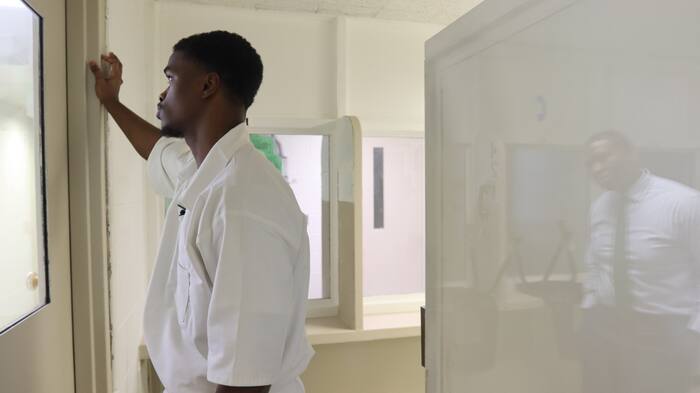
A.J. Armstrong will not receive a fourth trial for the murders of his parents after a Harris County judge ruled Wednesday that a complaint involving a prosecution witness did not qualify as evidence that should have been disclosed to the defense.
Judge Kelli Johnson announced her decision Oct. 28 after reviewing emails and hearing testimony during a hearing Tuesday. Armstrong’s appeals attorneys argued prosecutors failed to disclose information about Celestina Rossi, a blood spatter expert who testified for the prosecution during Armstrong’s third trial.
Armstrong’s attorneys argued the information could have affected how they challenged Rossi’s testimony during the trial that led to his 2023 conviction.
Johnson acknowledged that the defense did not know about a complaint against Rossi until after the verdict. However, the judge ruled the complaint did not meet the legal standard for a Brady violation, which involves prosecutors failing to disclose material evidence favorable to the defense.
“The court finds the complaint was not favorable because it raised unproven allegations,” Johnson said. “The defense offered no evidence at this hearing that the allegations against Rossi were true.”
During Wednesday’s ruling, Johnson said she found the witnesses who testified during the hearing credible. She also found that Rossi knew about the complaint but did not acknowledge it, and that the existence of the complaint was not communicated to the defense before the verdict.
Johnson said defense attorney Rick DeToto would have changed his strategy had he known about the complaint.
Despite those findings, the judge concluded the complaint was not material to the outcome of Armstrong’s trial.
“The court finds the complaint was not material, even if the jury had known, it would not have changed the outcome,” Johnson said.
Johnson added that the evidence presented during the third trial was overwhelming and that the third trial differed significantly from the first two.
The hearing centered on a complaint filed with the Texas Forensic Science Commission that accused Rossi of planting evidence in an unrelated case. Armstrong’s attorneys argued that information could have helped them challenge Rossi’s credibility and testimony.
Under Brady v. Maryland, prosecutors must disclose evidence favorable to the defense when it is material to a defendant’s guilt or punishment.
During Tuesday’s hearing, appellate attorney Patrick McCann asked Johnson to privately review 25 emails between Rossi and prosecutor John Jordan, dating from January 2022 through January 2024.
Prosecutors argued some of the communications were privileged and sought to quash the defense’s request.
Civil rights attorney Randall Kallinen was the first witness called during Tuesday’s proceedings. Prosecutors Ryan Trask and John Jordan, Rossi and defense attorney Rick DeToto were among those subpoenaed in connection with the hearing.
Trask previously said he did not learn about the complaint until after the verdict. He said he first heard about the complaint several days later while watching a news conference involving Kallinen and the family. During jury deliberations, Trask said he received a Click2Houston push alert about a lawsuit Armstrong had filed against the city but did not know about the complaint at that time.
Johnson’s ruling means Armstrong will not receive a fourth trial based on the claims raised during the hearing. His attorneys had sought to challenge his 2023 conviction by arguing the alleged failure to disclose information about Rossi undermined the fairness of the proceedings.
Armstrong was convicted in 2023 in the fatal shootings of his parents, Dawn and Antonio Armstrong Sr., in their Houston home in 2016. He has maintained his innocence.
For more coverage of the case, read our previous reporting on the October hearing and the Texas court decision that cleared the way for the hearing.


